

Social Partnership and New Forms of Employment Discussed by Russian and Belarusian Trade Unions in Minsk
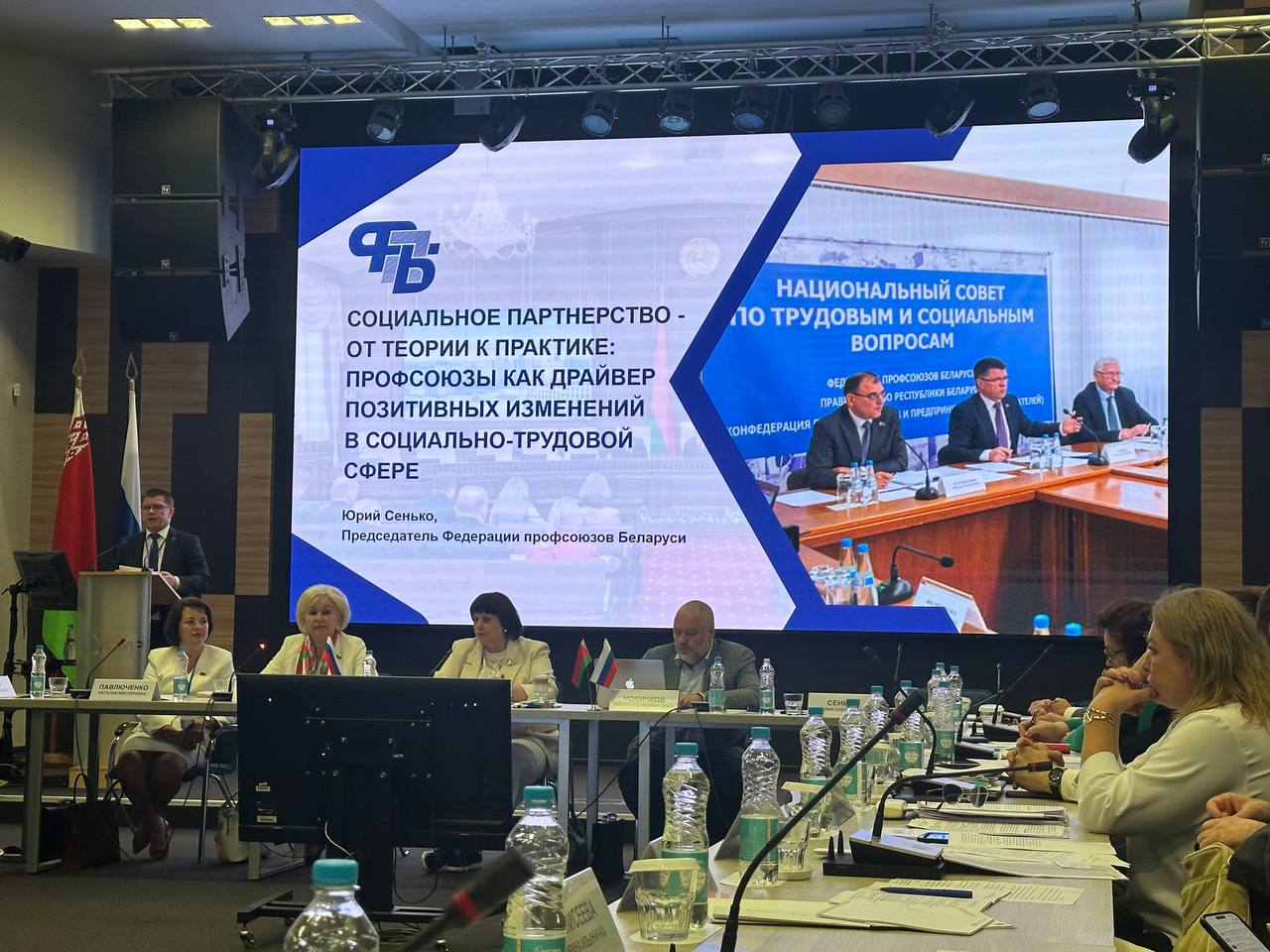
The development of the regulatory and legal framework, the creation of a unified legal information system, and other integration processes became key topics of discussion at the Standing Seminar of the Parliamentary Assembly of the Union of Belarus and Russia on the Construction of the Union State, held on July 10–11 in Minsk. This marks the 80th session of the seminar.
“An analysis and comparison of international experience shows that without a systemic social dialogue, it is impossible to ensure the continuous improvement of legislation and practical approaches in the social and labor sphere. The proposals put forward by trade unions regarding the development of labor legislation are based on the practice of collective bargaining and contractual regulation,” said Yuri Senko, Chairman of the Federation of Trade Unions of Belarus, in his address.
In his speech, the trade union leader emphasized the importance of understanding that agreements at various levels and the overall system of social partnership also contribute to addressing the challenges faced by employers, the social and labor sphere, and the state as a whole.
He highlighted the active role of trade unions in the legislative process, noting that representatives of the Federation of Trade Unions are members of the working group on amendments to the Labour Code, promote the concept of mentorship, and advocate for its formal recognition at the legislative level.
Significant attention during the session was devoted to issues of the platform economy and new and non-standard forms of employment. The level of worker involvement in the platform economy differs between Russia and Belarus, yet trade unions in both countries recognize the importance of these developments for their members and for the labor market as a whole.
“We understand the need to look ahead. That is why we are studying the experience of our international colleagues.
In particular, in May of this year, the platform economy and its impact on the labor market were discussed at the Forum of Trade Union Leaders of the Shanghai Cooperation Organization Countries, which took place in Beijing.
There is an agreement to explore China’s experience in more depth, and we are working on this today in cooperation with our International Trade Union University ‘MITSO’,” Yuri Senko noted.
GCTU News
-
Victor Pinsky:"总工会同盟会理事会在杜尚别的会议是独立国家联合体整个工会运动的里程碑事件"。
塔吉克斯坦杜尚别2026年7月1日--国家杜马监管和确保国家杜马活动委员会主席、总工会同盟会秘书长Victor Pinsky 召集了总工会同盟会理事会会议,会议于7月1日在杜尚别举行,这是独立国家联合体工会的里程碑事件。
-
Victor Pinsky 会见了塔吉克斯坦议会代表。
6月30日,塔吉克斯坦杜尚别--俄罗斯联邦国家杜马委员会主席、总工同盟合会秘书长 Victor Pinsky 与塔吉克斯坦共和国"Majlisi namoyandagon Majlisi Oli "Mahmadshoh Gulzada 达国际事务、公共协会和新闻委员会主席举行会议,讨论了以独联体形式制定劳动模范的工作。 今天在塔吉克斯坦议会杜尚别举行的会议,塔吉克斯坦议会的其他成员也出席了会议:环境委员会主席 Orif Amirzoda、议会道德委员会成员Naima Solizoda、塔吉克斯坦独立工会联合会主席 Karakhon Chillazoda 和总工会同盟会副秘书长Margarita Usova 。
-
Victor Pinsky会见了塔吉克斯坦劳动部副部长。
6月30日,塔吉克斯坦杜尚别--独立国家联合体成员国共同劳动力市场的逐步形成和劳动力移民监管成为俄罗斯联邦国家杜马委员会主席、总工会同盟会秘书长 Victor Pinsky与塔吉克斯坦共和国劳动、移民和就业部副部长 Sharif Norzoda 会议的主要议题。此外,塔吉克斯坦独立工会联合会主席(塔吉克斯坦独立工会联合会)参加了会议Karakhon Chillazoda,总工会同盟会副秘书长Margarita Usova,塔吉克斯坦独立工会联合会副主席Ismail Fayzizoda和塔吉克斯坦独立工会联合会审计委员会主席Dilmurod Davlatzoda。