

Conditions for Workers’ Active Longevity is a Matter of Economic Stability for CIS Countries – Viktor Pinsky
Special social policy measures in the CIS countries should focus on protecting the rights of elder workers, as this currently determines the economic stability of the Commonwealth nations, according to the General Confederation of Trade Unions (GCTU).
"The aging of the qualified workforce is a global trend, including in the CIS. Therefore, preserving and creating conditions for the active elder workers professional longevity that are skilled, educated, and capable of delivering high-quality results is a matter of economic and social stability for our countries and a guarantee of overall economic development," said Viktor Pinsky, GCTU Secretary General and Deputy of the State Duma.
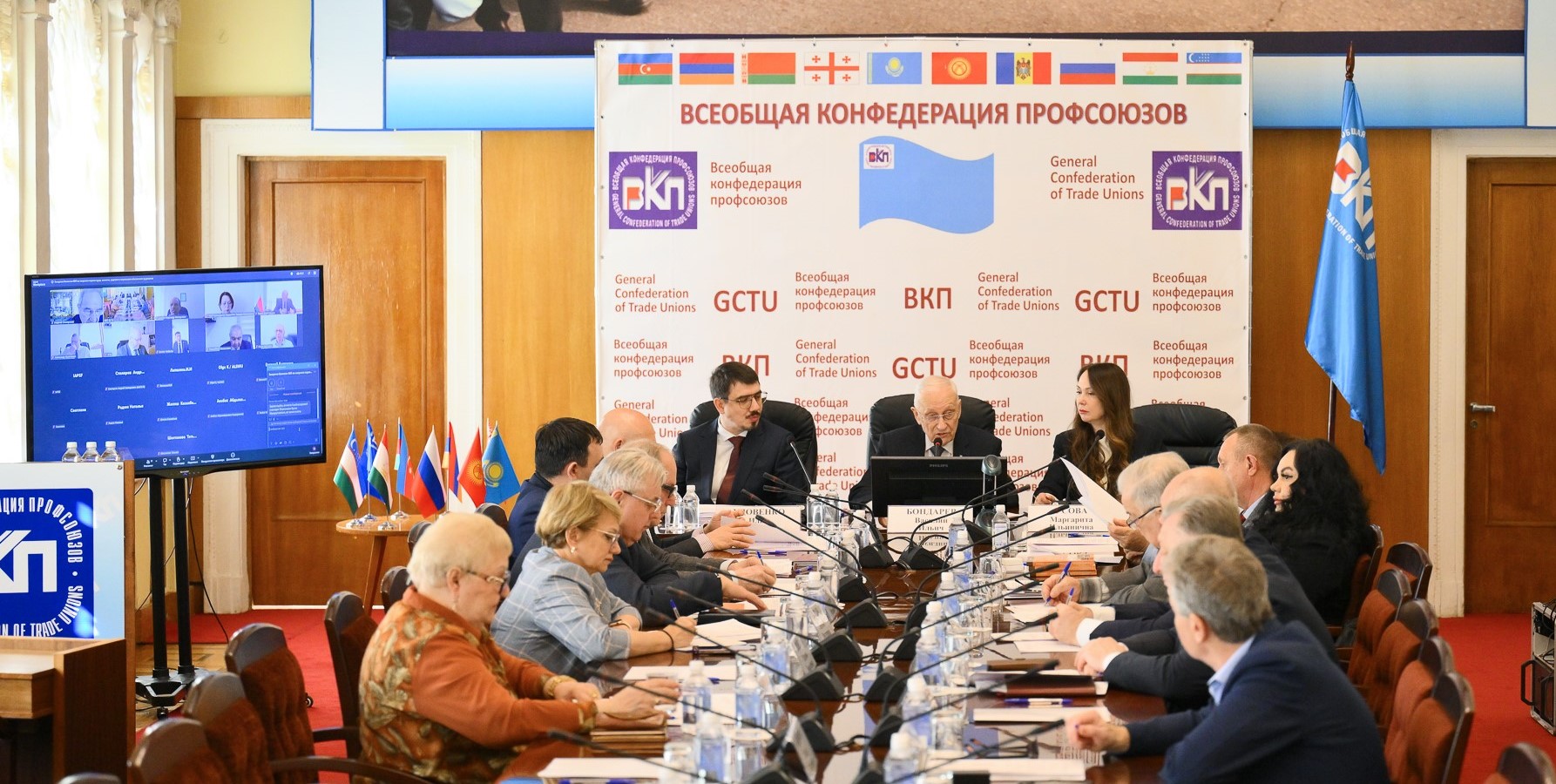
The issue of preserving human resources in the CIS countries was the main topic at the meeting of the GCTU Commission on Labor Protection, Ecology, Health, and Social Security for Workers, held in Moscow. The Commission proposed approving and sending the draft Recommendations for "Main Directions of Social Policy Regarding Older Workers in the CIS Member States," to the Standing Commission of the Interparliamentary Assembly (IPA) of the CIS on Social Policy and Human Rights. A special working group of the GCTU, which included representatives of national trade union centers of the CIS countries and international sectoral trade union associations within the GCTU, worked over the past two years in order to elaborate the document.
As stated in the explanatory note to the Recommendations draft, the share of elder workers in the overall workforce structure of the CIS has been steadily increasing for the past decade, with growth nearing 10%. This category of workers possesses unique production experience, and special formats are needed to pass it on, while special conditions must be created for the workers themselves. Among the necessary measures recommended by the trade unions are: supporting active professional longevity, adapting elder workers to changing technological conditions, facilitating the transfer of accumulated production experience and social self-realization of workers, protecting their labor and health, providing employment guarantees and opportunities for professional development, as well as offering social services at the workplace.
"The Interparliamentary Assembly of the CIS countries and the GCTU have been closely collaborating for decades. Thanks to our joint work, model laws and codes in the field of labor and social protection have been adopted, which have largely formed the basis of the CIS legislative framework. I am very grateful to the GCTU for preparing recommendations regarding older workers, as well as for the initiative to develop a new version of the model law on social partnership. Our common task is to address modern legislative gaps," said Evgenia Vladimirova, Secretary of the IPA CIS Commission on Social Policy and Human Rights, in her speech at the meeting.
Additionally, the participants of the meeting discussed the texts of the GCTU appeals related to World Day for Safety and Health at Work and the 40th anniversary of the Chernobyl Nuclear Power Plant disaster, as well as the GCTU cooperation with the Association of Developers, Manufacturers, and Suppliers of Personal Protective Equipment (PPE).
"Our mission is to protect the lives and health of workers. It is a great honor for us to elevate cooperation with trade unions in this area to the international level," said Vladimir Kotov, President of the PPE Association.
The meeting of the Commission was attended in a hybrid format—both in person and online—by over 40 people, including leaders of sectoral trade unions from Belarus, Kyrgyzstan, Kazakhstan, Russia, Tajikistan, and Uzbekistan, members of the special working group on the elaboration of the draft Recommendations, as well as leading international experts in the field of labor protection and health.
GCTU News
-
President of Russia Vladimir Putin Presents the Order of Honour to Viktor Pinsky
Viktor Pinsky, a member of the Russian State Duma and General Secretary of the General Confederation of Trade Unions (GCTU), has been awarded the Order of Honour. The award was presented by Vladimir Putin, President of the Russian Federation.
"My sincere congratulations! I am glad that your work has been duly recognised by the country's leadership," Vladimir Putin said as he presented the award to Viktor Pinsky.
The ceremony took place today in the St George's Hall of the Kremlin in Moscow.
-
Margarita Usova presents GCTU initiatives at the “Trade Unions. 21st Century” forum
On October 8, Sochi is hosting the 8th All-Russian Intelligence Forum “Trade Unions. 21st Century. An Era of Change.” For the third year running, the General Confederation of Trade Unions is the forum's general partner.
-
GCTU takes part in EEC Advisory Committee meeting on social security for workers
On October 8, Moscow hosted the ninth meeting of the Advisory Committee on Social Security, Pension Rights, Medical Care, and Professional Activities of Workers of the Eurasian Economic Union (EAEU) member states, held at the Eurasian Economic Commission (EEC).