

Social Partnership in the CIS Must Reach an Interstate Level – Viktor Pinsky
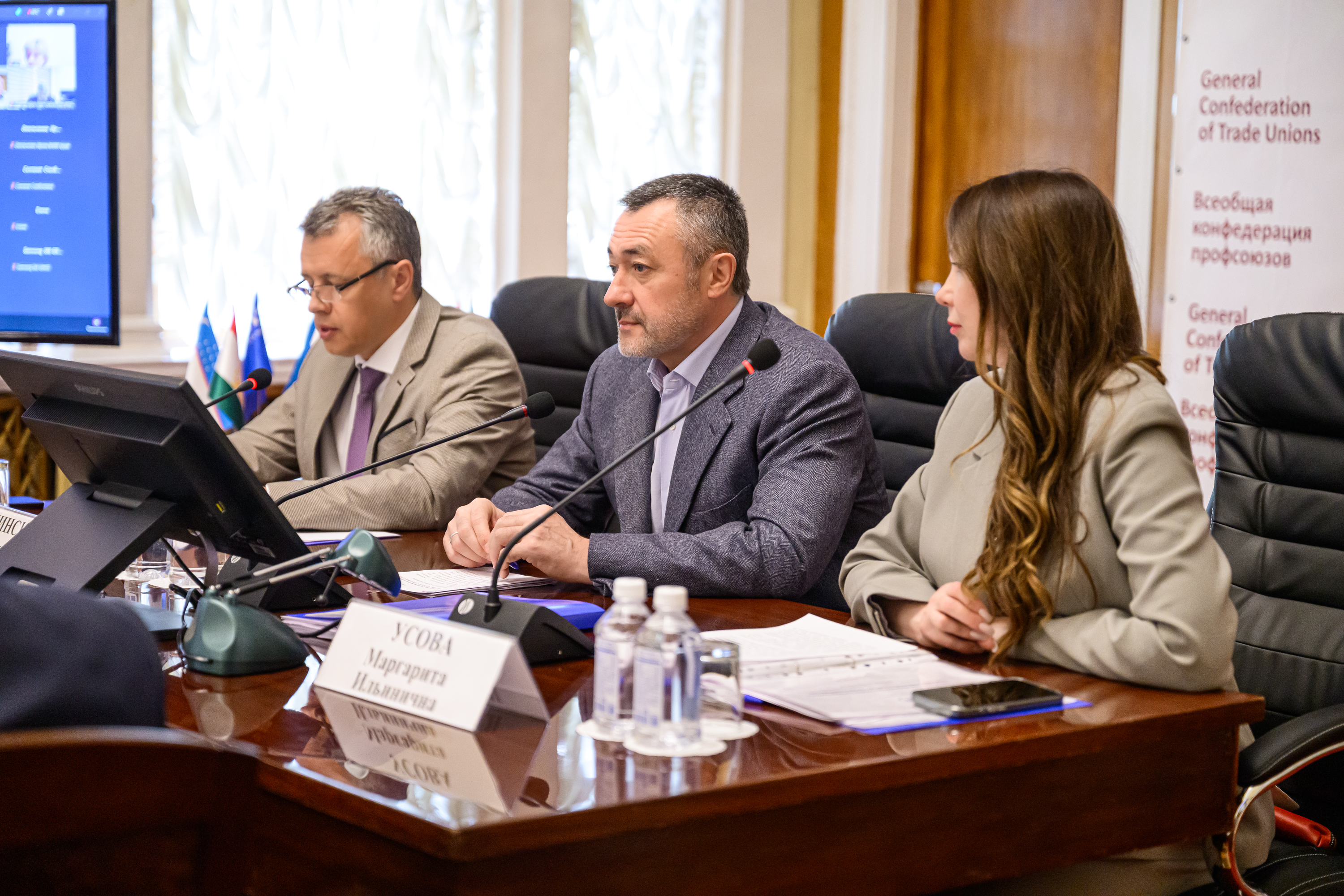
CIS Trade Unions to Revise Model Law on Social Partnership
The General Confederation of Trade Unions (GCTU) has decided to establish a working group to revise the CIS Model Law on Social Partnership. This decision was made during today’s meeting of the GCTU Commission on the Protection of Socio-Economic Interests of Workers and Legal Issues.
"We have analyzed the state of social partnership institutions in the CIS and identified a clear demand for a transition from national concepts to interstate communications in this area. This is primarily related to the main trends in migration processes that have been growing over many years. The total workforce within the CIS remains constant, but in countries with a negative migration balance, jobs are increasingly being filled by labor migrants from countries with a positive balance. Today, the number of labor migrants in the CIS is roughly equal to the population of one of our smaller countries. Clearly, this process needs to be further regulated, standards need to be improved, and wages and working conditions need to be equalized for all workers, regardless of their citizenship. Ultimately, it is in our common interest to maintain social peace within the CIS and promote the sustainable development of the entire Commonwealth," said Viktor Pinsky, Secretary General of the General Confederation of Trade Unions and Deputy of the State Duma of the Federal Assembly of Russia.
Viktor Pinsky presented a report on the state of social partnership in the CIS at the Commission meeting.
The meeting of the GCTU Commission on the Protection of Socio-Economic Interests of Workers and Legal Issues was held in Moscow. In addition to the Commission members, representatives of national trade union centers from the CIS countries, the event was also attended by representatives of the Eurasian Economic Commission, the Expert Council on Economics of the Interparliamentary Assembly of the CIS, and the All-Russian Scientific Research Institute of Labor of the Russian Ministry of Labor.
The meeting participants discussed the concept of a new version of the CIS Model Law on Social Partnership and the concept of a new solidarity campaign by the General Confederation of Trade Unions. This campaign will set new benchmarks in the CIS for establishing a minimum wage. Trade unions within the GCTU believe that the minimum wage should not be based on the subsistence minimum, as for now, but within a minimum consumer budget. A special GCTU working group, including all interested structures and representatives of the scientific community, will calculate its parameters.
GCTU News
-
President of Russia Vladimir Putin Presents the Order of Honour to Viktor Pinsky
Viktor Pinsky, a member of the Russian State Duma and General Secretary of the General Confederation of Trade Unions (GCTU), has been awarded the Order of Honour. The award was presented by Vladimir Putin, President of the Russian Federation.
"My sincere congratulations! I am glad that your work has been duly recognised by the country's leadership," Vladimir Putin said as he presented the award to Viktor Pinsky.
The ceremony took place today in the St George's Hall of the Kremlin in Moscow.
-
Viktor Pinsky addresses CIS trade unions
To mark World Day for Decent Work, observed on October 7, GCTU General Secretary Viktor Pinsky has addressed the Confederation's member organisations.
The GCTU is proposing a new benchmark for the minimum wage: the minimum consumer budget.
Viktor Pinsky called on CIS trade unions to support a new solidarity campaign: “Set the minimum wage at the level of the minimum consumer budget.”
The full text of the address can be found in the “Analytical Materials” section.
-
Margarita Usova: Migrant workers' interests must be taken into account in developing a common CIS migration space
On September 24, St. Petersburg hosted the 30th meeting of the Council of Heads of Migration Authorities of the CIS member states. The General Confederation of Trade Unions (GCTU) was represented at the meeting by Deputy General Secretary Margarita Usova, who delivered a report outlining the trade union position on labour migration and the development of a common CIS migration space.