

Viktor Pinsky: GCTU Must Play a Leading Role in Organizing Trade Union Education in the CIS
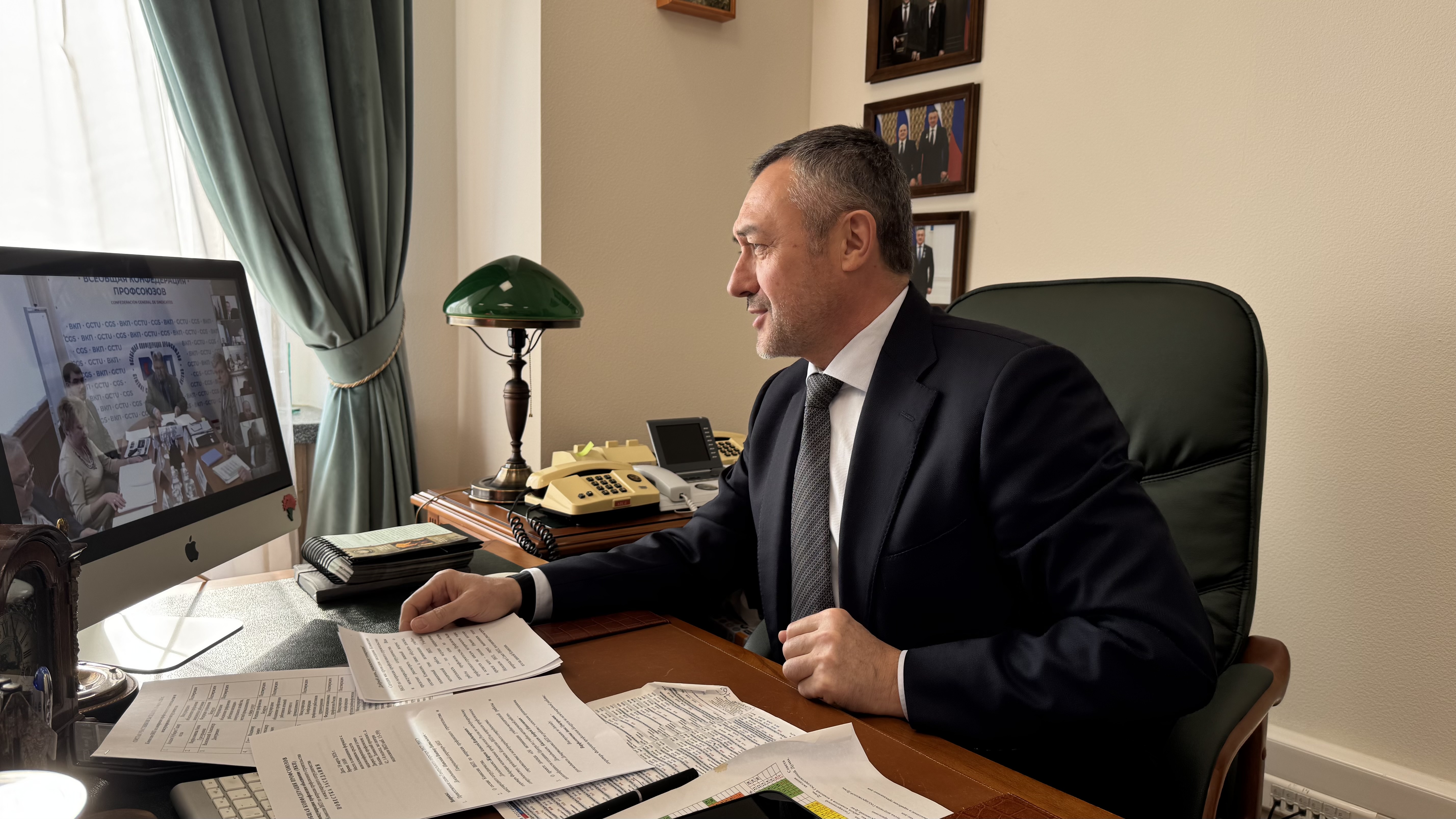
Viktor Pinsky, Secretary General of the General Confederation of Trade Unions (GCTU), believes that the GCTU should play a leading role in developing the system of training, retraining, and professional development, as well as in the exchange of experience and education of leaders and trade union activists across the CIS.
"We already have successful experience in organizing trade union education. This year, more than 400 people from six countries participated in the first two GCTU educational programs. The idea to launch such programs came from the requests of our member organizations. Internships are another popular format, especially among young people. They provide an opportunity to personally visit international organizations and see their work from the inside," said Viktor Pinsky.
Improving the qualifications of trade union members from different countries, developing trade union educational centers, pooling resources, and exchanging experiences among member organizations, as well as internships in international structures, are all included in the new GCTU Concept of Educational Activities. The draft Concept was discussed at the meeting of the GCTU Commission on Trade Union Building and International Cooperation, which took place on March 18.
The Concept of Educational Activities of the GCTU was presented in the report "On the Activation of Educational and Methodological Work and the Expediency of Creating a Center for Educational and Methodological Work." Special attention was paid to the already successfully implemented international educational programs of the GCTU, as well as its scientific and methodological activities, participation in working groups, and expert councils of the Interparliamentary Assembly of the CIS.
Evgeny Makarov, GCTU Vice President and Deputy Chairman of the Federation of Independent Trade Unions of Russia, emphasized that the Concept needs clearly formulated political goals. "We must help our member organizations represent and defend the interests of trade unions and strengthen the GCTU as an international organization. This is the main goal of the educational process," the speaker noted.
Murat Mashkenov, Secretary General of the Confederation of Labor of Kazakhstan, focused on the participation of trade unions in the work of state power representative and executive bodies. "As a Confederation of Labor, we have proposed participation and the allocation of special quotas for trade unions in the new People's Council of Kazakhstan," said Mashkenov, calling for this practice to be extended to other CIS countries.
Irkin Umarakhnov, Rector of the Institute for Advanced Training of the Federation of Trade Unions of Uzbekistan, supported the thesis on the demand for educational programs among trade union members. "The focus should be on attracting young people. They are mobile, open to innovations and new approaches," said the professor. He also noted that the activation of educational and methodological work is a key factor in strengthening the trade union movement.
"Improving the qualifications of trade union personnel and activists, new educational programs, and a center for educational and methodological work are indeed necessary," said Anna Varfolomeeva, Secretary of the Federation of Trade Unions of Belarus for International Affairs.
Natalya Chernysheva, Chairperson of the International Confederation of Trade Unions of Workers in Trade, Public Catering, Consumer Cooperation, and Various Forms of Entrepreneurship, believes it is important to invite representatives of the trade union movement from distant foreign countries as lecturers. "Interaction with colleagues from trade unions outside the CIS can become one of the means for developing and expanding international trade union cooperation of the GCTU and its member organizations," she said.
The Concept was supported by Ismoil Fayzizoda, First Deputy Chairman of the Federation of Independent Trade Unions of Tajikistan. "Timely and high-quality training of trade union activists has always been and remains one of the main priorities for trade unions," the speaker noted.
Alexey Zharkov, Secretary of the Federation of Independent Trade Unions of Russia for International Cooperation and Chairman of the GCTU Commission on Trade Union Building and International Cooperation, acted as the leading moderator of the Commission's meeting.
GCTU News
-
President of Russia Vladimir Putin Presents the Order of Honour to Viktor Pinsky
Viktor Pinsky, a member of the Russian State Duma and General Secretary of the General Confederation of Trade Unions (GCTU), has been awarded the Order of Honour. The award was presented by Vladimir Putin, President of the Russian Federation.
"My sincere congratulations! I am glad that your work has been duly recognised by the country's leadership," Vladimir Putin said as he presented the award to Viktor Pinsky.
The ceremony took place today in the St George's Hall of the Kremlin in Moscow.
-
Margarita Usova presents GCTU initiatives at the “Trade Unions. 21st Century” forum
On October 8, Sochi is hosting the 8th All-Russian Intelligence Forum “Trade Unions. 21st Century. An Era of Change.” For the third year running, the General Confederation of Trade Unions is the forum's general partner.
-
GCTU takes part in EEC Advisory Committee meeting on social security for workers
On October 8, Moscow hosted the ninth meeting of the Advisory Committee on Social Security, Pension Rights, Medical Care, and Professional Activities of Workers of the Eurasian Economic Union (EAEU) member states, held at the Eurasian Economic Commission (EEC).